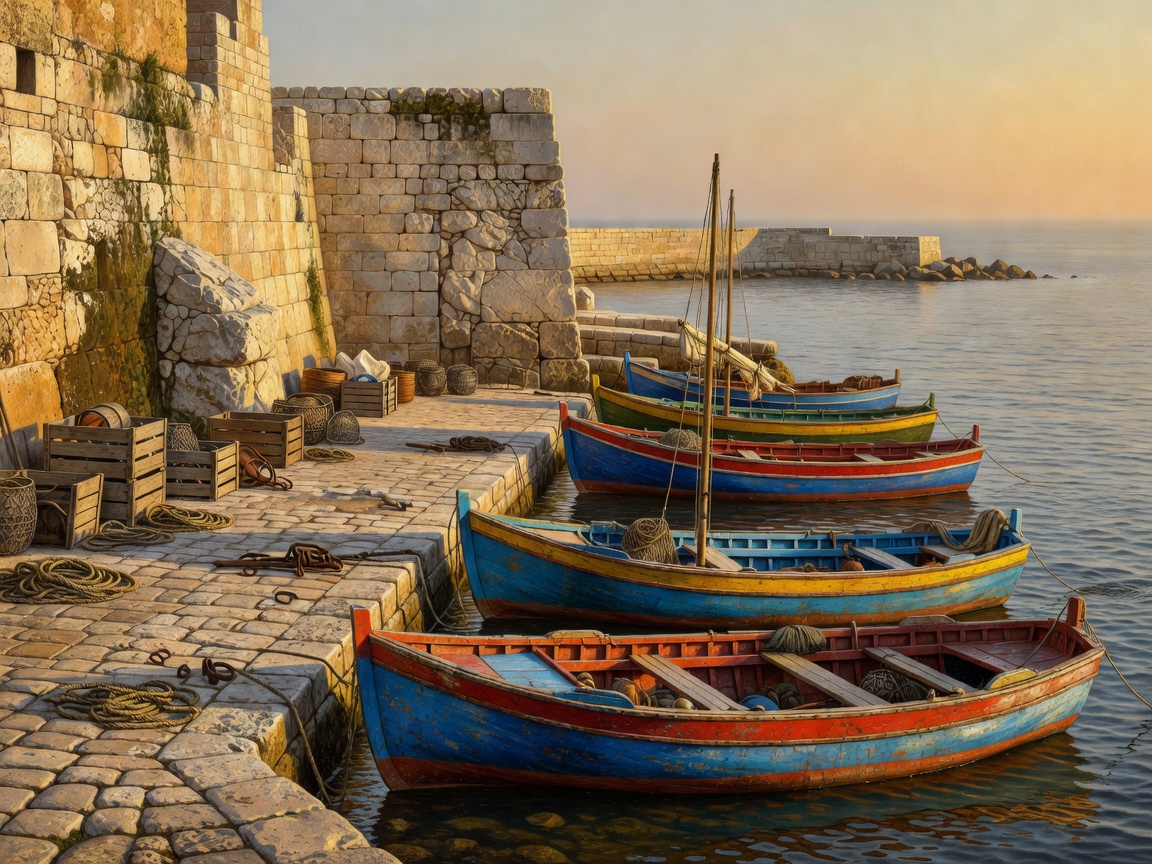
Harbor architecture is shaped by use. A quay needs to support movement between land and water. A breakwater changes exposure. A shed stores tools or equipment. Boat form responds to the work and conditions of a particular fleet. The visible result also reflects available materials and local building practice.
Quays, piers and breakwaters
Quays create an edge for mooring, landing and movement. Their height, surface and access points vary with the shoreline and intended use. Steps or ramps may meet small craft; a broader working edge may serve different vessels or loading needs. Visitors should not infer safe access from appearance. Follow public routes and posted restrictions.
Piers extend into the water and can separate movement, provide additional mooring space or connect sections of a port. Breakwaters reduce exposure by changing how waves reach an enclosed area. Their shape and position respond to local conditions, but no structure removes all weather effects. Access to a breakwater can be limited, especially when surfaces are wet or exposed.
Harbor walls and edges require maintenance. Saltwater, waves, weather and daily use place repeated demands on surfaces and joints. Repairs can create contrasts between older masonry and newer work. Those differences often record practical upkeep rather than a change in the harbor’s identity.
Stone, timber and working buildings
Limestone appears in many Mediterranean coastal settings because it is common in parts of the region and has long been used in local construction. Its color and texture vary. A stone wall may belong to a quay, a retaining structure or a nearby building; visual similarity alone does not establish its age or purpose.
Timber is visible in doors, sheds, boat details and waterfront fittings. Painted metal may appear on railings, mooring hardware and newer infrastructure. Salt, sun and repeated use affect these materials, so repair and repainting are part of the working landscape. Weathered surfaces are not necessarily abandoned or historic.
Warehouses and boat sheds are practical spaces for storage, repair or handling. Their orientation and access often relate to a quay, road or sheltered yard. Some older buildings have been adapted for public uses, while other structures continue to support port activity. Current function and access need local confirmation.
Traditional vessels and modern adaptations
Fishing vessels across the Mediterranean differ in size, hull shape, propulsion, equipment and working role. Traditional construction practices and painted hulls remain visible in some ports, alongside newer materials and adaptations. There is no single Mediterranean fishing boat type. A vessel’s appearance does not reliably identify its current work, capacity or operating rules.
Boat arrangements reflect practical trade-offs: stability, access to working areas, storage, maintenance and the conditions in which a vessel operates. Modern adaptations can add equipment or update onboard systems while retaining a familiar hull form. Specific technical claims should be based on reliable vessel information, not visual guesswork.
Boats also shape the space around them. Mooring lines, fenders and turning room affect how people move along a quay. Keep clear of ropes and boat edges. Do not board vessels or touch fittings without permission.
Good for / What to know
Good for
- Connecting structures to harbor tasks.
- Comparing local materials and repair patterns.
- Observing how boats use the available quay.
What to know
- Public access to piers and breakwaters can vary.
- Surfaces may be uneven, wet or exposed.
- Do not infer vessel details from appearance alone.
Read the whole working edge
Look from a public path and connect each structure with its surroundings: water depth, shelter, settlement, roads and storage. This gives a more useful picture than treating an old wall or painted boat as an isolated object. For named structures or vessels, check local interpretation and current official information.