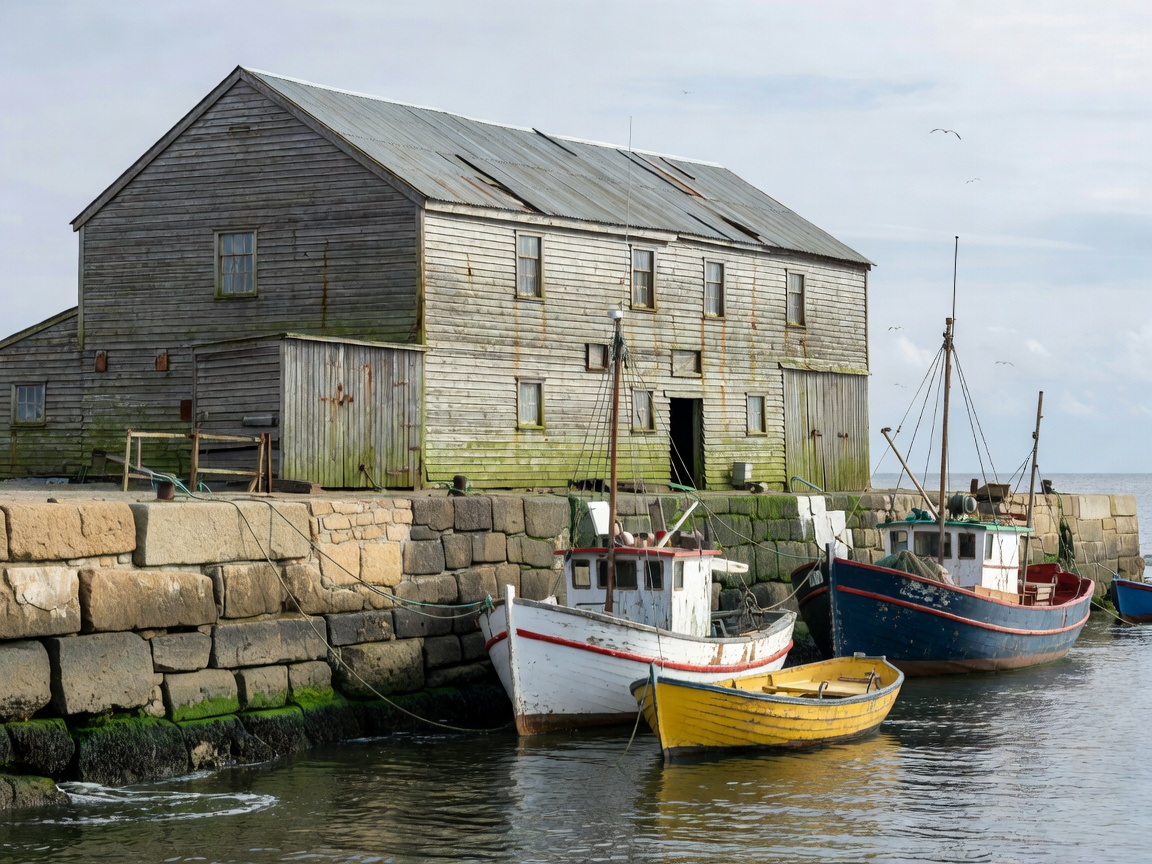
Historic fishing ports are not single monuments. They are groups of structures and routes that supported landing, repair, storage, trade and access to the water. Their present form often combines older fabric with altered buildings, new services and continuing harbor operations.
Start with the quay layout
A quay places land and water in direct working contact. Its edges may include landing points, steps, mooring positions, loading areas and routes to nearby streets. In older port districts, the waterfront can be narrow because the settlement grew close to a naturally sheltered basin. Elsewhere, later extensions create wider working surfaces or separate functions across several basins.
Look for connections rather than assuming that a building’s age explains its use. A market building near the water may have served several purposes over time. A broad open space may once have supported handling or storage and now function as a public route. Present access rules take priority over architectural interest.
Historic harbor layouts often reflect practical constraints: depth, shore shape, available building land and protection from waves. The result varies by port. Some areas retain tight lanes between homes and quay; others have open edges shaped by later infrastructure. A port’s original arrangement may remain legible even when daily operations shift elsewhere.
Warehouses, market spaces and defenses
Harbor warehouses offered covered space near transport and landing points. Their doors, floor access and relationship to the quay can suggest how goods moved, but they do not prove a specific past use without reliable local documentation. Some buildings remain in service; others have been adapted for civic, cultural or commercial uses. Renovation can preserve a streetscape while changing the activities that once supported it.
Fish markets and related facilities connect landing areas to buyers and distribution. Their layout may separate public circulation from handling work. Current arrangements differ, and visitor entry is not automatic. Verify whether a market is open to the public, which areas are accessible and whether photography is allowed.
Harbor defenses may form part of a larger coastal settlement rather than a fishing facility alone. Walls, towers or protected entrances can speak to the strategic importance of a shoreline. They can also create sheltered edges now used for mooring, walking or public gathering. Avoid assigning a date or purpose based on appearance alone; consult local interpretation or authoritative heritage records.
How ports change and keep working
Fishing methods, vessel needs, transport systems and safety rules change. A historic quay may not suit every modern task. Ports respond through repairs, extensions, designated work areas and new equipment. In some places, working activity shifts to another basin while the older waterfront becomes more accessible. In others, fishing, heritage uses and visitor movement remain close together.
Conservation brings trade-offs. Protecting older stonework can retain a port’s character, but working surfaces also need maintenance and safe access. Adapted warehouses can keep useful buildings in service, while new uses can increase public interest and investment. Tourism pressure can also compete for limited space, raise demand for waterfront land and obscure the everyday role of the port.
Look for evidence of continuity in ordinary details: repair sheds, mooring lines, crates, loading routes and signs that separate work from public circulation. Their presence does not mean every historic-looking harbor is an active fishing port. Confirm current activity locally and do not enter restricted areas.
Good for / What to know
Good for
- Understanding how harbor space has been reused.
- Connecting old buildings with waterfront routes.
- Comparing conservation and working functions.
What to know
- Historic appearance does not confirm present use.
- Access can be restricted even on public-facing quays.
- Use local heritage sources for specific dates and claims.
Observe without interrupting
Use public paths and follow posted instructions. Give crews, vehicles and equipment room to move. A quiet quay may be in use later, and a public promenade may run beside restricted operations. Respect barriers and avoid touching tools, nets, lines or stored materials.