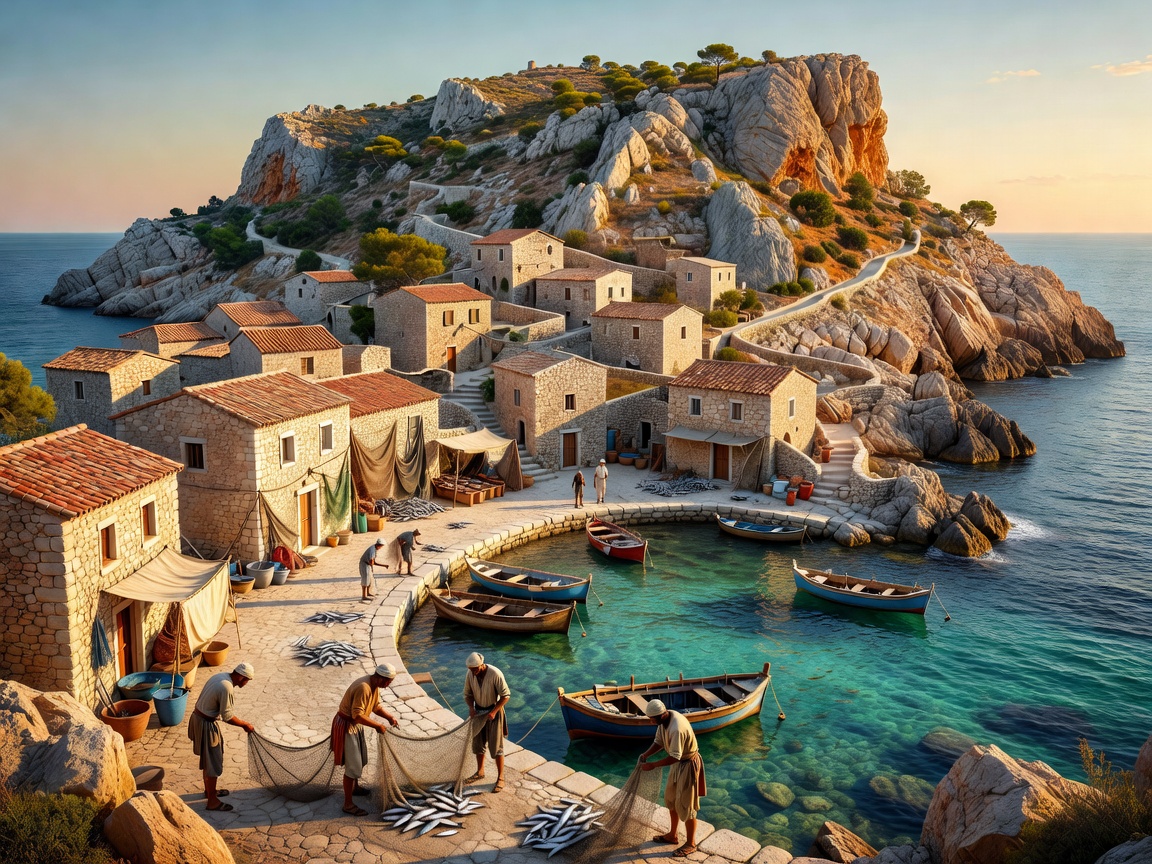
Mediterranean fishing harbors sit in varied settings: enclosed gulfs, island coves, river mouths, open coastlines and engineered waterfronts. Geography affects shelter, access, harbor scale and the relationship between boats and nearby settlements. It does not create one standard harbor type.
Coastline and shelter
A sheltered bay can reduce exposure to prevailing waves and provide room for moorings, landing areas and harbor-side buildings. Natural shelter has limits. The entrance may be narrow, the water shallow, or the usable shore crowded by homes and roads. In an enclosed basin, boat movement and visitor access can concentrate into a small area.
Exposed coasts often need more substantial breakwaters or a harbor positioned behind a headland. Structures can make a working area more usable, but they do not remove weather risk. Conditions change by season and can differ along a single stretch of coast. Check local marine information before traveling by water.
Island ports commonly connect fishing activity with passenger movement and supply routes. Space can be constrained by steep terrain, limited flat land and a strong seasonal visitor demand. Mainland harbors may have wider road access or links to larger settlements, though this depends on location. Neither setting guarantees a particular fleet, market or level of public access.
Regional patterns are local, not uniform
Along parts of the western Mediterranean, compact coves and island landings sit beside larger urban ports. The contrast can be close together: one harbor may center on small boats while another serves several types of marine traffic. Across the Adriatic, the shape of the coast, islands and inlets creates many sheltered settings, but local ports still vary in size, infrastructure and use.
In the eastern Mediterranean, island and mainland routes connect settlements with different terrain, climate and access constraints. A steep coast may place a village above the quay. A low-lying shore can allow a broader waterfront but may require different protection. These are geographic tendencies, not rules for every port.
Fishing patterns also respond to local waters, regulations, fleet choices, weather and markets. Species, gear and landing practices are not interchangeable from one region to another. Harbor architecture and market culture reflect those working conditions alongside local building traditions and food supply networks.
Scale, food links and visitor pressure
Small harbors offer a close view of boats, quays and settlement form. Their limits are equally clear: narrow access, fewer public facilities and little room to separate visitors from daily work. Larger ports may provide more transport options and public routes, but active operations can occupy extensive areas. A prominent historic setting does not mean that every quay is open to visitors.
Nearby agriculture and food systems help shape what is sold and eaten around a harbor. Coastal markets may connect seafood with produce from inland farms, island orchards or regional supply chains. Do not assume that a market is public, open daily or supplied by boats visible at the quay. Verify current access and local rules through official local sources.
Tourism pressure can change how waterfront buildings are used. Warehouses may become cultural or commercial spaces; former work areas can gain public promenades. Some ports retain landing, repair or storage functions beside new uses. The useful comparison is not “old versus new,” but how work, public access and conservation share limited shoreline.
Good for / What to know
Good for
- Comparing island and mainland settlement patterns.
- Reading shelter, terrain and harbor scale together.
- Planning a route around distinct coastal settings.
What to know
- Public access and active work zones vary by port.
- Weather and transport can change plans quickly.
- Check local transport, access notices and marine conditions.
Use geography as a starting point
Map the coast, identify the settlement and then check the harbor’s current function. A quiet-looking quay may still serve boats, storage or local transport. A large waterfront may contain small public sections within restricted operational areas. Keep to signed public routes and avoid treating working equipment as scenery.