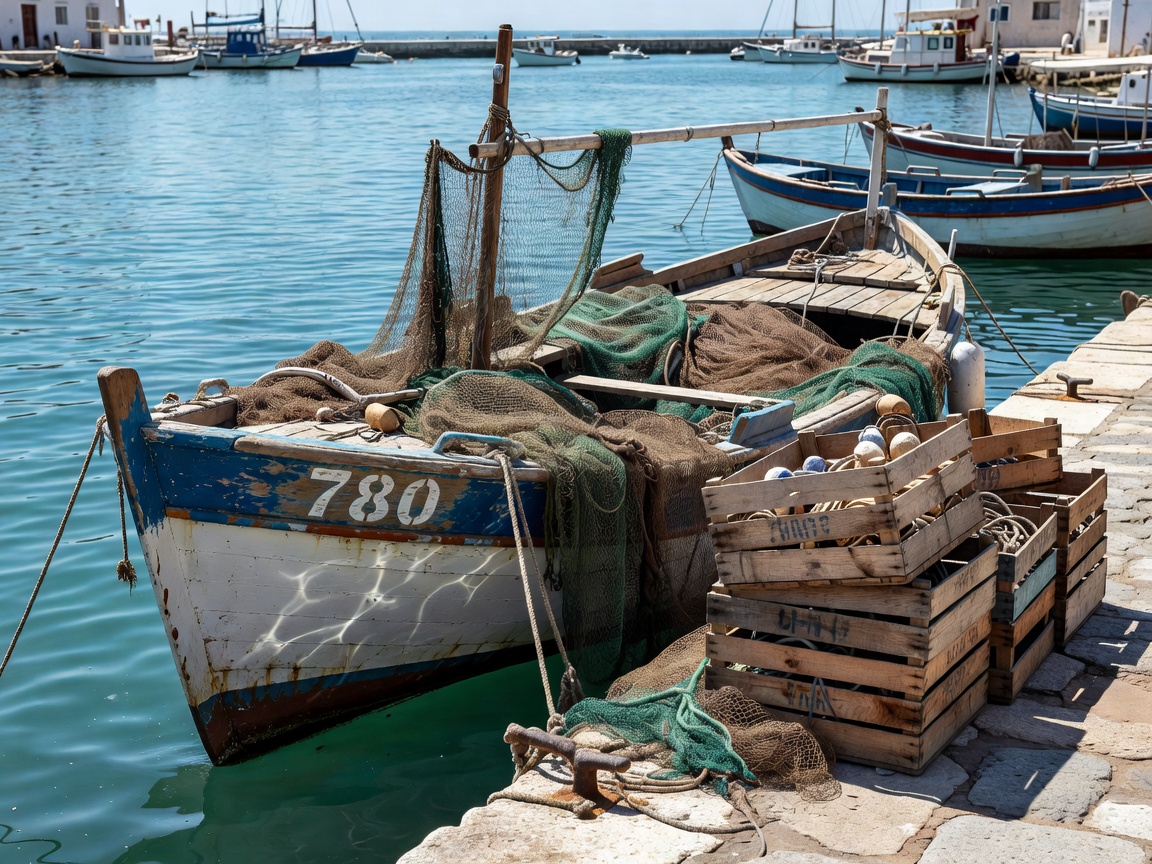
A working waterfront is a practical space first. Boats, landing points, equipment, storage and routes have to fit together. What a visitor sees is only part of the operation; schedules, methods and public access differ between ports and can change with the season, weather and local rules.
A sequence, not a fixed timetable
Boats may prepare equipment, depart, return or remain tied up for maintenance. The visible mix depends on the fleet and its work. Some harbors show a concentrated arrival period; others have activity spread across the day. Do not assume that a quiet morning means no work, or that every vessel follows the same routine.
Landing areas connect boats with shore facilities. Catch may be transferred, sorted, stored or moved onward under local procedures. Handling arrangements can be visible from a public route, but the working area itself may be restricted. Keep walkways clear and never approach a load, vehicle or moving vessel to get a closer view.
Equipment can include nets, ropes, containers, floats and maintenance tools. These items are arranged for work, not display. A line under tension, an unstable crate or an unfamiliar surface can present risks. Do not touch, move, step over or sit on equipment. Follow barriers and signs even when no crew is nearby.
Markets, maintenance and seasonal work
Market activity may take place on site, in a nearby building or through other local channels. Public access, timing and sales arrangements vary. A market should not be treated as a guaranteed visitor attraction. Confirm any access details with the market or relevant local authority before making a special trip.
Maintenance is a normal part of waterfront life. Boats may be cleaned or repaired; nets and other equipment may be sorted; supplies may be loaded. This work can continue between trips and is not limited to a single morning window. Give crews space, avoid blocking doors and ramps, and use a different route if work occupies the quay.
Seasonal changes affect effort and activity, while weather can delay or alter plans. Local regulations also shape when, where and how fishing can take place. These factors differ between locations and years. This guide describes common observable categories, not the schedule or rules of any particular port.
A safe and respectful visit
Visitors and commercial activity can share a waterfront, but they do not have equal priority at every point. Working areas may have vehicle movement, restricted access or uneven surfaces. Keep children close, stay out of marked zones and do not stand behind a reversing vehicle or near a moving boat.
- Stay on signed public paths and clear of landing operations.
- Respect barriers, access restrictions and local signage.
- Keep a safe distance from moving boats, forklifts and vehicles.
- Do not handle nets, ropes, crates, fuel containers or tools.
- Ask before photographing people, vessels at close range or private work areas.
- Leave room for crews and never block a working route for a photograph.
Harbors can be wet, uneven and exposed. Choose footwear suitable for public walking, check the forecast and adapt to local conditions. Do not enter a boat, shed or fenced work area without clear permission. If a public route is closed, use another route rather than crossing an operational area.
Good for / What to know
Good for
- Observing how vessels and shore facilities connect.
- Learning the difference between a public quay and a work zone.
- Understanding why activity changes over time.
What to know
- Market access and work schedules are location-specific.
- Equipment and mooring lines can create hazards.
- Local signs and crew instructions take precedence.
Keep the operation moving
A good visit does not require access to the working area. Use public viewpoints, move aside when crews need space and leave the waterfront as you found it. For current access conditions, consult the relevant harbor authority or local information source. Do not rely on general descriptions as permission to enter.